 EPG Canada winchdrive Co., LtdEPG Canada winchdrive Co., Ltd
Drum-integrated gft-w family hydraulic winch drive for crane and material-handling systems. Built as a selection and RFQ page rather than a copied catalogue sheet: model claims are limited to approved or official parent-company evidence.
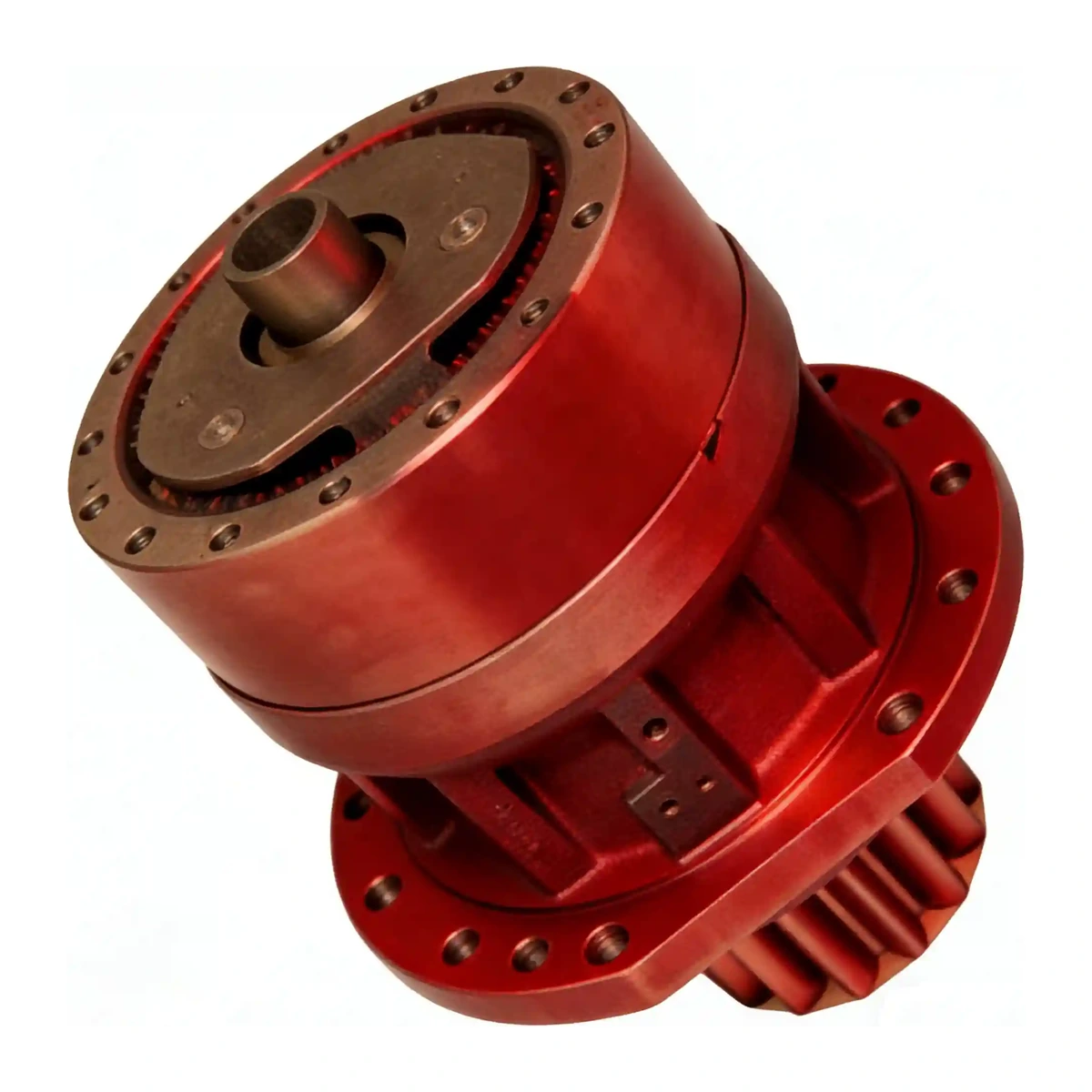
| Product model | EP-GFT80W3 |
|---|---|
| Product family | GFT-W winch-drive planetary gearbox |
| Official parent-company evidence | HZPT GFT-W winch-drive family page |
| Application role | Drum-integrated gft-w family hydraulic winch drive for crane and material-handling systems. |
| Approved model drawing in this project | Not supplied. Request the current project-specific drawing before manufacture, replacement or installation. |
| Model-specific torque / ratio / dimensions | Not published here unless confirmed by an approved model document. Family ranges are not silently converted into individual model ratings. |
| Selection inputs required | Line pull or torque, rope and drum dimensions, speed, duty cycle, motor data, brake duty, mounting interfaces, environment and certification needs. |
This table is intentionally conservative. It helps buyers understand what is known, what is still unknown and which information must be exchanged before an engineered selection is released. That evidence boundary is especially important on replacement projects where a legacy model name can hide changes in flange, spline, brake or motor interfaces.
A planetary winch drive is not selected in isolation. The motor, brake, gearbox, drum, rope, supporting bearing, frame, hydraulic or electrical controls and load path form one system. For EP-GFT80W3, the first design question is therefore not “what is the biggest torque value?” but “what does the duty cycle ask the entire drive train to do?” The engineering team should define the load spectrum, normal and peak line pull, drum core diameter, number of rope layers, target rope speed, required holding behavior, motor speed range and mounting envelope before a ratio or brake is frozen. drum-integrated GFT-W family hydraulic winch drive for crane and material-handling systems. A compact drum-integrated arrangement can reduce external shafting, but it also makes interface definition more important because gearbox support, drum support and frame stiffness directly influence alignment.
For the EP-GFT80W3 inquiry, document the assumption behind every calculated value. Separate customer inputs from derived values, and identify which items must be verified by EPG engineering. This avoids a common failure mode in winch projects: a number copied from a reference page becomes treated as a guaranteed rating even though the operating class, speed, drum radius or mounting condition is different. Where calculations are preliminary, label them as such and keep the approved drawing and final quotation as the controlling documents.
A useful RFQ for EP-GFT80W3 should include more than a model name. State the winch function, whether the load is lifted or only pulled horizontally, the maximum and typical line pull, rope diameter, bare-drum diameter, maximum winding diameter, number of layers, desired drum speed, expected starts per hour and annual operating hours. Add the prime mover type and its speed, displacement or power, available hydraulic pressure/flow when applicable, and required control philosophy. Environmental inputs matter as well: ambient temperature, salt spray, dust, washdown, altitude, shock, vibration, offshore or mining duty, and any third-party certification requirement. If the unit is a replacement, provide the existing nameplate, mounting drawing, spline or shaft details, brake release data, motor interface and several photographs with a scale reference.
For the EP-GFT80W3 inquiry, document the assumption behind every calculated value. Separate customer inputs from derived values, and identify which items must be verified by EPG engineering. This avoids a common failure mode in winch projects: a number copied from a reference page becomes treated as a guaranteed rating even though the operating class, speed, drum radius or mounting condition is different. Where calculations are preliminary, label them as such and keep the approved drawing and final quotation as the controlling documents.
Winch buyers often start with line pull, while gearbox data are commonly expressed as output torque. These quantities are linked by the effective drum radius: required drum torque rises with line pull and with the radius of the active rope layer. That means a winch that meets the pull requirement on the first layer may produce less line pull at outer layers for the same gearbox torque. Conversely, a design based only on bare-drum radius can understate the torque needed at a larger winding diameter. For EP-GFT80W3, calculate at all critical layers and include mechanical efficiency and acceleration effects. Distinguish continuous or duty-class torque from short-duration peak and static emergency conditions; do not treat one published maximum number as a universal operating rating.
For the EP-GFT80W3 inquiry, document the assumption behind every calculated value. Separate customer inputs from derived values, and identify which items must be verified by EPG engineering. This avoids a common failure mode in winch projects: a number copied from a reference page becomes treated as a guaranteed rating even though the operating class, speed, drum radius or mounting condition is different. Where calculations are preliminary, label them as such and keep the approved drawing and final quotation as the controlling documents.
The reduction ratio must place the drum speed in the useful range while keeping motor operation efficient and within overspeed limits. Start from the desired rope speed and mean working drum diameter, derive drum rpm, and compare that with motor speed. Hydraulic motors may have a broad controllable speed range, while electric systems may use variable-frequency drives and different motor base speeds. Ratio selection for EP-GFT80W3 should also consider no-load return speed, thermal duty, braking behavior and controllability at low speed. A ratio that looks ideal at one operating point can create excessive motor speed, poor controllability or unnecessary heat elsewhere in the cycle. The final selection should therefore be checked against the complete operating profile rather than a single nominal point.
For the EP-GFT80W3 inquiry, document the assumption behind every calculated value. Separate customer inputs from derived values, and identify which items must be verified by EPG engineering. This avoids a common failure mode in winch projects: a number copied from a reference page becomes treated as a guaranteed rating even though the operating class, speed, drum radius or mounting condition is different. Where calculations are preliminary, label them as such and keep the approved drawing and final quotation as the controlling documents.
A lifting winch needs a clearly defined fail-safe strategy. Many planetary winch architectures use spring-applied, hydraulically or electrically released multi-disc parking brakes; however, the exact brake arrangement, release pressure, allowable dynamic use and required redundancy must be confirmed for the selected configuration. Do not assume that a parking brake is intended to absorb continuous lowering energy. The control circuit or electric drive normally manages dynamic motion, while the static brake secures the stopped load according to the system design. For EP-GFT80W3, the inquiry should state whether personnel lifting, offshore lifting, emergency lowering, secondary braking, backstop functionality or classification-society review is involved so that an appropriate engineered option can be proposed.
For the EP-GFT80W3 inquiry, document the assumption behind every calculated value. Separate customer inputs from derived values, and identify which items must be verified by EPG engineering. This avoids a common failure mode in winch projects: a number copied from a reference page becomes treated as a guaranteed rating even though the operating class, speed, drum radius or mounting condition is different. Where calculations are preliminary, label them as such and keep the approved drawing and final quotation as the controlling documents.
Drum-integrated gearboxes concentrate torque and radial load into a compact envelope. The winch frame must keep mounting faces flat, concentric and stiff enough to prevent harmful distortion. Where the gearbox family uses a rotating flange attached to the drum, the opposite side of the drum normally requires a suitable support bearing as part of the overall arrangement. The exact bearing concept must follow the approved drawing. During integration of EP-GFT80W3, check bolt grade and tightening procedure, pilot diameters, spline engagement, motor adapter, brake connections, oil access and room for service tools. The designer should also verify that weld distortion of the frame will not pull the drive and opposite drum support out of alignment.
For the EP-GFT80W3 inquiry, document the assumption behind every calculated value. Separate customer inputs from derived values, and identify which items must be verified by EPG engineering. This avoids a common failure mode in winch projects: a number copied from a reference page becomes treated as a guaranteed rating even though the operating class, speed, drum radius or mounting condition is different. Where calculations are preliminary, label them as such and keep the approved drawing and final quotation as the controlling documents.
Planetary winch drives can be compact enough that thermal behavior becomes a limiting factor before tooth strength in high-duty applications. Oil viscosity, fill quantity, mounting orientation, churning losses, input speed and ambient temperature all influence temperature. A selection review for EP-GFT80W3 should therefore ask how long the winch runs continuously, how much time is spent lifting versus lowering, and whether the installation is enclosed near heat sources. Provide access to fill, level and drain points without removing the drum whenever the configuration allows it. Establish oil sampling and change intervals from the approved manual and actual operating environment rather than copying maintenance intervals from an unrelated gearbox family.
For the EP-GFT80W3 inquiry, document the assumption behind every calculated value. Separate customer inputs from derived values, and identify which items must be verified by EPG engineering. This avoids a common failure mode in winch projects: a number copied from a reference page becomes treated as a guaranteed rating even though the operating class, speed, drum radius or mounting condition is different. Where calculations are preliminary, label them as such and keep the approved drawing and final quotation as the controlling documents.
Before commissioning EP-GFT80W3, confirm that the installation matches the approved drawing and that all protective devices are functional. Verify oil level, mounting fasteners, hose or cable routing, brake release circuit, rotation direction, rope anchoring, guarding and emergency stops. The first functional test should be controlled and should check operation at low load before progressing through the project acceptance plan. Record motor pressure/current, speed, temperature and unusual noise so there is a baseline for future maintenance. For lifting systems, the machine builder remains responsible for the completed winch, controls, safety functions and compliance of the assembled machine; the gearbox is one component of that verified system.
For the EP-GFT80W3 inquiry, document the assumption behind every calculated value. Separate customer inputs from derived values, and identify which items must be verified by EPG engineering. This avoids a common failure mode in winch projects: a number copied from a reference page becomes treated as a guaranteed rating even though the operating class, speed, drum radius or mounting condition is different. Where calculations are preliminary, label them as such and keep the approved drawing and final quotation as the controlling documents.
A replacement project should never rely on a model-name cross-reference alone. Even where two products are marketed for the same legacy family, compare the complete mounting interface, pilot and flange dimensions, spline geometry, motor adapter, brake torque and release interface, ratio, rotation convention, oil ports, mass, allowable radial load and duty rating. For EP-GFT80W3, EPG Canada winchdrive should receive the old drawing or a dimensional survey and return an approved interface drawing before the customer modifies the drum or frame. This evidence-led process reduces the risk of a gearbox that physically bolts on but does not match the brake, ratio, load path or service factor.
For the EP-GFT80W3 inquiry, document the assumption behind every calculated value. Separate customer inputs from derived values, and identify which items must be verified by EPG engineering. This avoids a common failure mode in winch projects: a number copied from a reference page becomes treated as a guaranteed rating even though the operating class, speed, drum radius or mounting condition is different. Where calculations are preliminary, label them as such and keep the approved drawing and final quotation as the controlling documents.
No permissioned customer testimonial was supplied for this project, so this page does not fabricate a review, star rating or customer name. The evidence currently available is product-family documentation from the parent-company sites and the user-supplied factory/product imagery. Ask sales for approved inspection records, a permissioned case reference or project-specific quality documents if those are required for supplier qualification.
No. A cross-reference is useful for screening, but final selection requires the existing drawing/nameplate and application duty. Mounting, ratio, brake and load data must be confirmed.
Only values shown on an approved model-specific quotation or drawing should be used for final engineering. This website deliberately separates family context from project-approved ratings.
Send nameplate photos, current drawing, line pull or torque, drum dimensions, rope details, motor data, brake requirements, duty cycle, ambient conditions and the required certification or inspection scope.
The wider winch-drive market uses both hydraulic and electric prime movers. Availability for a specific model and adapter must be confirmed during selection.